Navigating commercial building regulations can be daunting for any business owner, but ensuring full accessibility is non-negotiable. Compliance isn’t just about avoiding legal penalties; it’s about making your space welcoming, inclusive, and easy to navigate for every visitor. When it comes to permanent identification, specific high-quality installations are mandatory. Understanding exactly where ADA signs are required ensures your commercial facility remains legally compliant while providing a seamless experience for clients and employees alike.
Which Areas of a Building Must Have ADA Signs for Compliance and Accessibility?

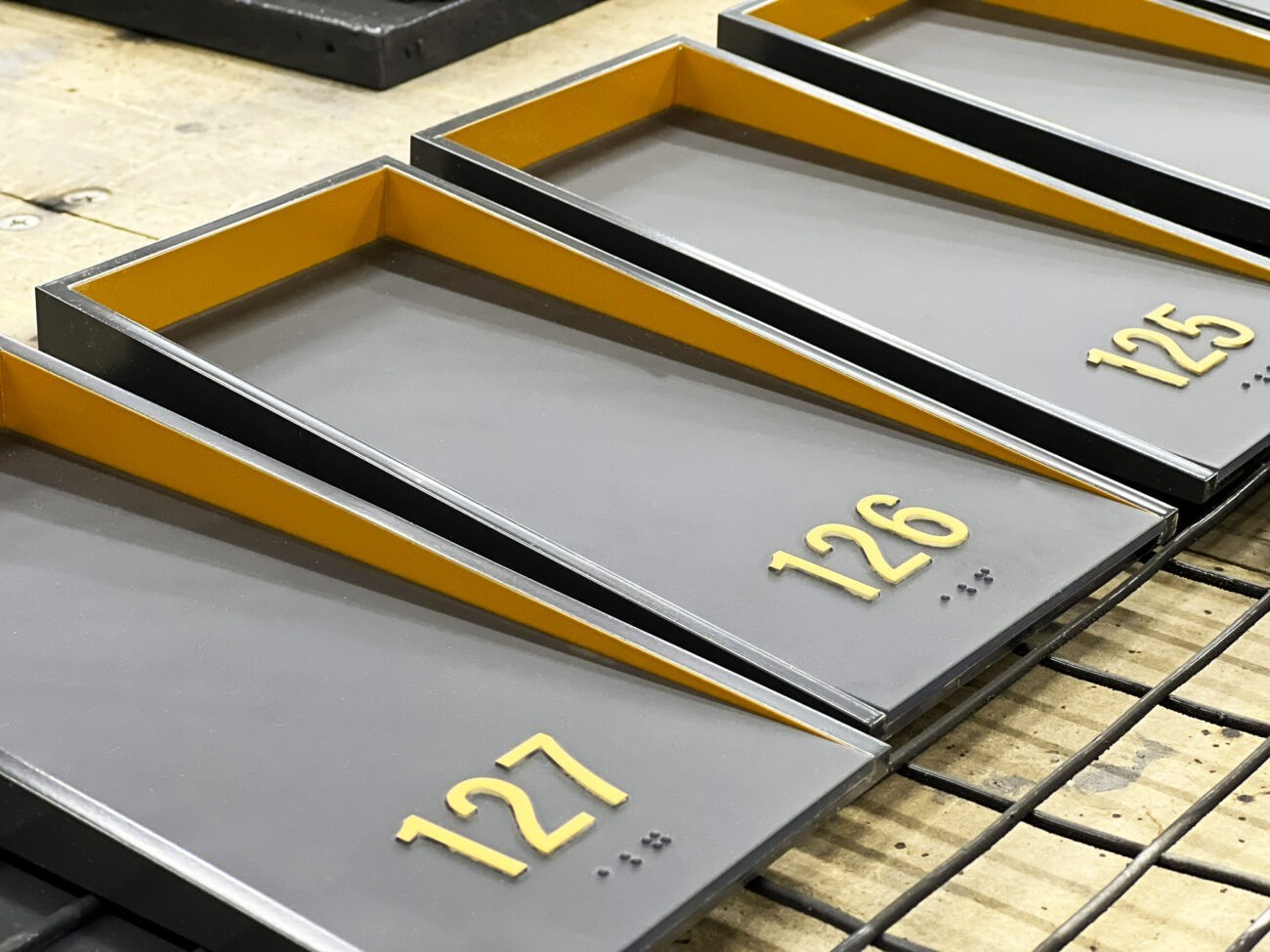
The Americans with Disabilities Act dictates that any permanent room or space within a commercial facility must be clearly identified. This means ADA signs—complete with tactile lettering, high contrast, and Grade 2 Braille—are required at all major architectural touch-points.
Key locations include restrooms, exits, stairwells, and mechanical rooms. Individual offices, conference rooms, and kitchenettes require compliant signage if their function remains permanent. If a space is designated for a specific, unchanging purpose, it needs to be clearly labeled so that individuals with visual impairments can confidently find their way without barriers.
How Do Building Layout and Traffic Flow Determine the Placement of ADA Signage?
Compliance goes beyond simply hanging a placard on a wall; it requires careful analysis of your building’s traffic flow and physical layout. ADA signs must be installed at a specific height and location to ensure they are safely reachable and readable.
Standard regulations require them to be mounted on the latch side of a door, allowing a visually impaired individual to approach and touch the sign without being struck by a swinging door. In high-traffic corridors or double-door entryways, layout determines whether signs are placed on the right-hand wall or centered on the nearest adjacent surface, ensuring clear, unobstructed sight-lines from every direction of approach.
High-quality, compliant signage blends effortlessly into your building’s architecture while fulfilling critical accessibility standards. By taking a proactive approach to your facility’s layout, you protect your business and showcase your commitment to premium client care.
Connect with our expert design team today to create fully compliant, beautifully crafted ADA signs that elevate your space. Contact BSC Signs now to schedule a consultation and get started on your specialized signage project!